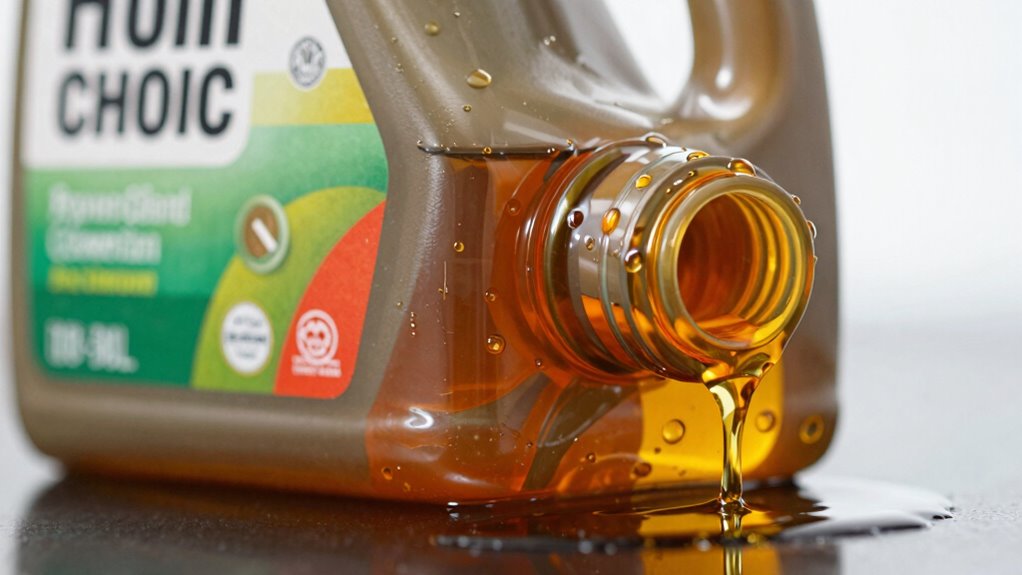
Learn why dark oil can signal high-quality reservoirs or hidden problems, and how to interpret its true significance.
Browsing Category
Engine Oil Fundamentals
38 posts
Calcium vs Magnesium Detergents: Why Formulas Shift Over Time
Calcium vs magnesium detergents: discover why formulas shift over time and how these changes impact your cleaning effectiveness in different water conditions.
Boron Additives: The Quiet Player in Modern Formulations
The subtle yet vital role of boron additives in enhancing modern materials will surprise you, revealing how they silently shape everyday products.
Molybdenum in Oil: What It Does (and What It Doesn’t)
Great insights into molybdenum in oil reveal its benefits and limitations, but understanding its full role requires delving deeper into how it truly safeguards your machinery.
Anti-Wear vs Anti-Friction: Two Additives People Mix Up
In exploring anti-wear versus anti-friction additives, understanding their distinct roles can prevent costly mistakes and optimize your engine’s performance.
Viscosity Improvers: The Polymer Tradeoff Behind Multigrade Oils
Inevitable polymer breakdown in multigrade oils affects viscosity, but understanding this tradeoff can help optimize engine performance—discover how inside.
What ‘GTL’ Base Oil Means (and Why It’s Mentioned)
Fascinatingly, GTL base oil’s unique production process enhances performance and longevity—discover why it’s a game-changer for your engine.
PAO vs Ester vs Group III: The Base Oil Reality Check
Ongoing comparisons of PAO, ester, and Group III base oils reveal crucial differences that could impact your engine’s performance; discover which is best for you.

Synthetic vs Conventional: The Definition War and What Actually Matters
The truth about synthetic versus conventional products depends on more than labels—discover what truly matters beyond the definition war.
The Additive Clash Myth: When Mixing Oils Is Fine—and When It’s Not
For those wondering if mixing engine oils causes harmful clashes, understanding compatibility is key, but when is it truly safe to blend?