Use this guide to select synthetic motor oil that meets your vehicle’s requirements, then change the oil and filter if you have the right tools and a safe place to work. It is for drivers with basic hands-on skills; allow 45-90 minutes for a first oil change. If you only need to top up the oil, follow the selection and checking instructions, then add a small amount at a time.

Get business pricing on garage and car supplies
- Business-only prices and quantity discounts
- Tax-exempt purchasing
- Multiple users, one account, clear invoices

Mobil 1 Advanced Full Synthetic Motor Oil, 5W-30, 5 Quart
- ✔ Oil type: Full synthetic motor oil
- ✔ Viscosity: SAE 5W-30
- ✔ Container size: 5 quarts
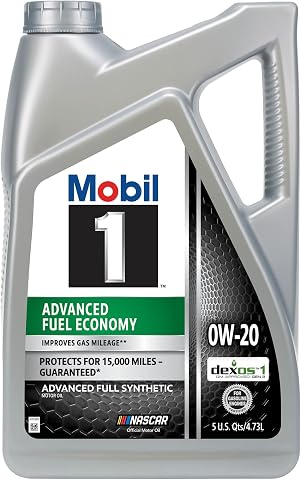
Mobil 1 Advanced Fuel Economy Full Synthetic Motor Oil, 0W-20, 5 Quart
- ✔ Oil type: Full synthetic motor oil
- ✔ Viscosity: SAE 0W-20
- ✔ Container size: 5 quarts

Valvoline MaxLife High Mileage 5W-20 Synthetic Blend Motor Oil, 5 qt
- ✔ Oil type: Synthetic blend motor oil
- ✔ Viscosity: 5W-20
- ✔ Size: 5 quarts
Difficulty: Intermediate | Time: 45-90 minutes
What You’ll Need
Tools & Materials:
- Owner’s manual or manufacturer service information
- Synthetic motor oil in the specified viscosity and approval
- Replacement oil filter matched to the vehicle
- Socket or wrench for the drain plug and oil-filter wrench if needed
- Drain pan, funnel, gloves, and shop towels
- Vehicle ramps or a jack with rated jack stands, if access underneath is required
- Wheel chocks
Knowledge:
- How to locate the dipstick, oil filler cap, drain plug, and oil filter
- How to raise and support a vehicle using the equipment manufacturer’s instructions
Work on level, solid ground with the engine off. Let a hot engine cool until the oil and nearby parts will not burn you. Never work beneath a vehicle supported only by a jack. Check local rules for used-oil disposal before starting.
Mobil 1 Advanced Full Synthetic Motor Oil, 5W-30, 5 Quart
For a vehicle that specifies 5W-30, Mobil 1 Advanced Full Synthetic is the most balanced pick in this group. Its full-synthetic formulation is described as helping reduce friction and limit sludge and deposit buildup, while its cold-start performance addresses the period when oil circulation and protection matter especially to drivers in low temperatures. The five-quart container also suits a typical oil-change quantity, though the correct fill volume is vehicle-specific.Compared with the 0W-20 Advanced Fuel Economy, this oil is the better fit when the manual calls for 5W-30; the 0W-20’s fuel-economy focus does not make it a substitute. Compared with Valvoline MaxLife, Mobil 1 is a full synthetic aimed at broad engine protection, while MaxLife is a blend with a high-mileage focus. Mobil 1’s stated interval of up to 15,000 miles or one year is a manufacturer claim, not a reason to extend a vehicle’s prescribed schedule. Choose it for a compatible 5W-30 engine; skip it if your manual calls for another grade or a specific approval not confirmed here.
Pros:
- Full-synthetic formulation aimed at reducing friction and deposits
- Cold-start and low-temperature performance claims
- Five-quart container
- ILSAC GF-7 listed standard
Cons:
- 5W-30 fit must be confirmed against the vehicle manual
- The 15,000-mile protection statement is capped at one year and does not replace vehicle guidance
Best for: Drivers whose owner’s manual specifies 5W-30 and who want a full-synthetic oil with stated cold-start and deposit-control benefits.
Not ideal for: Owners whose vehicles require 0W-20, 5W-20, or a specific approval that this listing does not establish.
Bottom line: Our strongest all-around choice here is Mobil 1 Advanced Full Synthetic 5W-30, provided that grade and required specifications match your vehicle.
“Our strongest all-around choice here is Mobil 1 Advanced Full Synthetic 5W-30, provided that grade and required specifications match your vehicle.”
Mobil 1 Advanced Fuel Economy Full Synthetic Motor Oil, 0W-20, 5 Quart
When a vehicle specifies 0W-20, Mobil 1 Advanced Fuel Economy makes the most targeted case in this lineup. Its formulation is intended to support fuel economy while helping protect against wear, sludge, and deposits. The grade is also listed as suitable for cars, trucks, and hybrids, giving it a clear role for drivers whose compatible vehicle calls for 0W-20.That role is narrower than the 5W-30 Mobil 1 pick: the grade in the owner’s manual decides, not the product’s fuel-economy label. Compared with 5W-30, this oil is the more specific choice for an engine designed for 0W-20 and low-temperature starts. Compared with Valvoline MaxLife, it is a full synthetic with a fuel-economy emphasis rather than a high-mileage blend with seal conditioners. It does not solve every efficiency concern, and its stated protection interval still ends at one year even if mileage is lower. Skip it if your engine requires a heavier grade.
Pros:
- Fuel-economy-focused formulation
- Full synthetic oil
- Listed as suitable for hybrid vehicles
- Designed for cold starts and low-temperature performance
Cons:
- 0W-20 is unsuitable for engines requiring a different grade
- Manufacturer-stated protection interval is limited to one year as well as mileage
Best for: Owners of cars, trucks, and hybrids whose manuals specify 0W-20, particularly those prioritizing a fuel-economy-oriented formulation.
Not ideal for: Drivers whose engines require 5W-20, 5W-30, or another grade, or who need a high-mileage-focused formula.
Bottom line: For a compatible 0W-20 vehicle, this is the lineup’s clearest fuel-economy-focused full synthetic; the grade is its defining constraint.
“For a compatible 0W-20 vehicle, this is the lineup’s clearest fuel-economy-focused full synthetic; the grade is its defining constraint.”
Valvoline MaxLife High Mileage 5W-20 Synthetic Blend Motor Oil, 5 qt
Valvoline MaxLife serves a different buyer from the two Mobil 1 oils: it is a 5W-20 synthetic blend developed for engines with 75,000 miles or more. Seal conditioners are intended to help reduce leaks and oil consumption, while detergents address corrosion and deposits. Those features give it a specific reason to be on this list for owners of older, higher-mileage engines that require 5W-20.Its tradeoff is just as clear. Unlike both Mobil 1 options, MaxLife is a synthetic blend rather than a full synthetic, so buyers prioritizing a full-synthetic formulation should look to Mobil 1 if their vehicle’s grade matches. MaxLife also cannot replace a 0W-20 or 5W-30 oil simply because its high-mileage features sound appealing. Its listed standards include API SQ and ILSAC GF-7A, plus Ford and Chrysler specifications; check whether your vehicle requires one of these or another approval. This is the specialized pick, not the default for every older car.
Pros:
- High-mileage formulation for engines with 75,000 miles or more
- Seal conditioners intended to help reduce leaks and oil consumption
- Detergents aimed at deposits and corrosion
- Lists API SQ and ILSAC GF-7A standards
Cons:
- Synthetic blend rather than full synthetic
- 5W-20 grade limits fit to compatible engines
- High-mileage positioning does not guarantee that it addresses a particular engine problem
Best for: Owners of engines with at least 75,000 miles whose vehicle manual specifies 5W-20 and who want a formula aimed at high-mileage concerns.
Not ideal for: Drivers seeking a full synthetic, or anyone whose vehicle calls for a viscosity other than 5W-20.
Bottom line: Choose MaxLife when your high-mileage engine calls for 5W-20 and the blend’s listed specifications match; otherwise, the Mobil 1 oils offer the full-synthetic route in their respective grades.
“Choose MaxLife when your high-mileage engine calls for 5W-20 and the blend’s listed specifications match; otherwise, the Mobil 1 oils offer the full-synthetic route in their respective grades.”
As an Amazon Associate we earn from qualifying purchases.
Before You Start
Confirm that your vehicle uses engine oil you can service yourself. Some vehicles have underbody panels, cartridge filters, electronic oil-level checks, or service procedures that call for special tools. If the manual specifies a procedure you cannot follow safely, use a qualified service shop.
Do not choose oil by the word “synthetic” alone. Viscosity, such as 0W-20, and required manufacturer standards matter. Synthetic and conventional oils can generally be mixed when they meet the vehicle’s specifications, but mixing does not make an oil that lacks the required approval suitable.
Step-by-Step Instructions
Step 1: Check the vehicle’s oil requirements
Open the owner’s manual and find the engine-oil section. Write down the required viscosity grade, any manufacturer approval or performance standard, the oil capacity with a filter change, and the recommended service interval. Check whether the vehicle requires a particular oil formulation, such as low-ash oil for an emissions system.
If the manual is missing, look up the exact year, make, model, engine, and market in the manufacturer’s service information. Do not rely on a general online chart that does not identify your engine.
Tip: The oil filler cap may show a viscosity grade, but it may not list every required approval. Use the manual or manufacturer data for the complete specification.
Check: You have the viscosity, required approval or standard, oil capacity, and service guidance for your exact engine.
Step 2: Buy compatible oil and a matching filter
Select oil labeled with the specified viscosity and the required performance category or manufacturer approval. Check the container label rather than choosing by brand, price, or a “full synthetic” claim alone. Buy enough oil to meet the stated capacity while keeping a small amount available for level adjustment.
Choose a filter listed for your exact vehicle and engine. Compare the part number with a trusted parts catalog or manufacturer listing. Also obtain a new drain-plug washer if the service information calls for one.
Tip: A bottle can carry several ratings. Confirm that it includes the rating your manual calls for; a newer standard is not automatically a substitute for a named manufacturer approval.
Check: The oil label matches the required grade and standard, and the filter listing matches your exact engine.
Step 3: Prepare the vehicle and work area
Park on level, firm ground, engage the parking brake, and switch off the engine. Place wheel chocks as directed for your vehicle. Gather the oil, filter, tools, drain pan, funnel, gloves, and towels before lifting the vehicle.
If the drain plug or filter requires access underneath, use ramps or lift the vehicle at the specified points and support it with correctly rated jack stands. Follow the equipment instructions, and check that the vehicle is stable before going underneath. Remove an underbody panel only as the service procedure directs.
Tip: Do not crawl under a vehicle held only by a jack, and do not work on soft soil, a slope, or an unstable surface.
Check: The vehicle is secure and level enough for the service procedure, and every tool and replacement part is within reach.
Step 4: Drain the old oil
Locate the drain plug and place the pan beneath it. If the manual allows it, run the engine briefly to warm the oil, then shut the engine off and wait until the oil is safe to handle. Remove the oil filler cap or loosen it to help the oil drain.
Use the correct tool to loosen the drain plug carefully. Finish removing it by hand while keeping it pointed away from you. Let the oil flow into the pan. When it slows to a drip, inspect the plug threads and replace the washer if required. Refit the plug and tighten it to the manufacturer’s specified torque; do not guess or overtighten.
Tip: The oil can still be hot after the engine is shut off. Keep your hands and face out of the oil’s path.
Check: The oil has drained into the pan, the plug is seated with the correct washer, and the area around it is dry.
Step 5: Replace the oil filter
Position the drain pan under the filter. Remove the old filter using the correct method for its type. For a spin-on filter, check that its old rubber gasket came off with it; a gasket left on the engine can cause a serious leak.
Wipe the filter mounting surface clean. Lubricate the new filter’s gasket with fresh oil if its instructions call for it. Install the replacement filter according to its package or the service information. For a cartridge filter, fit the new seals in the specified grooves and tighten the housing to the stated torque.
Tip: Do not apply a universal rule such as “tighten another turn.” Filter designs differ; follow the filter or vehicle instructions.
Check: The new filter is the correct part, its seals are correctly seated, and it is tightened as specified.
Step 6: Add the specified synthetic oil
Lower the vehicle if the service procedure permits, and keep it on level ground. Put a funnel in the filler opening and add less than the listed total capacity at first. Wait briefly, check the dipstick or electronic level using the manual’s procedure, and add oil in small amounts until the level reaches the specified range.
Refit the filler cap and dipstick. Do not pour in the full listed capacity without checking the level; some oil remains in the engine after draining.
Tip: If the vehicle uses an electronic level check, follow its required warm-up, parking, and waiting instructions. A reading taken under the wrong conditions may be inaccurate.
Check: The oil level is within the marked range or the vehicle’s specified electronic range, and both cap and dipstick are fully seated.
Step 7: Run the engine and inspect for leaks
Start the engine and let it idle briefly while watching the oil-pressure warning light. Shut the engine off immediately if the light stays on, you hear unusual engine noise, or oil appears to leak. Inspect around the drain plug and filter without reaching near moving or hot parts.
If there are no warning signs, shut the engine off and wait the time specified in the manual before checking the level again. Add a little oil if needed, then recheck for leaks. Reinstall any underbody panel you removed and lower the vehicle safely.
Tip: A brief delay before the oil-pressure light goes out can occur after service, but a light that remains on needs immediate attention. Do not keep running the engine to see whether it clears.
Check: The warning light goes out as expected, the oil level is correct after the settling period, and no oil is leaking.
Step 8: Record service and recycle the used oil
Write down the date, odometer reading, oil grade and specification, and filter part number. Reset the service reminder only by following the vehicle’s procedure. Pour the used oil into a sealed, clean container and take it, along with the old filter, to an authorized collection or recycling site.
Keep used oil away from drains, soil, waterways, children, and pets. Do not mix it with coolant, fuel, brake fluid, or solvents, since contamination can prevent recycling.
Tip: Call the collection site first if you are unsure about container limits or filter acceptance.
Check: The maintenance record is updated, the service reminder is handled correctly, and used oil and the filter are stored for proper recycling.
Common Mistakes to Avoid
- Buying an oil with the right viscosity but the wrong manufacturer approval or performance rating. — Match every oil requirement listed in the manual, including named approvals and emissions-system requirements.
- Overfilling the engine by adding the full listed capacity after draining. — Add less than the stated capacity first, then check the level and top up gradually on level ground.
- Leaving the old filter gasket on the mounting surface or fitting a cartridge seal in the wrong groove. — Inspect the mounting surface after removal and follow the filter’s installation instructions for its seals.
- Working underneath a vehicle supported only by a jack or tightening the drain plug by guesswork. — Use ramps or rated jack stands on firm, level ground, and follow the specified drain-plug torque.
Troubleshooting
Problem: The oil-pressure warning light stays on after startup.
Solution: Shut off the engine immediately. Check the oil level, drain plug, filter installation, and for leaks. If the light remains on or the cause is unclear, do not drive; arrange professional inspection.
Problem: Oil leaks around the filter after the change.
Solution: Switch off the engine. Check that the old gasket was removed, the new filter or cartridge seals are seated correctly, and the filter is the correct part. Replace damaged seals and follow the stated tightening procedure.
Problem: The dipstick reads above the full mark.
Solution: Do not run the engine until the excess oil is removed. Drain a small amount or have a service shop extract it, then recheck the level using the manual’s procedure.
Problem: You cannot loosen the drain plug, filter, or underbody panel safely.
Solution: Stop before rounding the fastener or damaging the panel. Use the correct tool or service procedure, or have a qualified technician complete the job.
What Success Looks Like
The engine contains synthetic oil that matches the vehicle’s viscosity and required approvals. The correct filter and seals are installed, the oil level sits within the specified range, the oil-pressure warning behaves normally, and no leaks appear around the filter or drain plug. The service details are recorded, and the used oil and filter are set aside for approved recycling.
Next Steps
Follow the vehicle manufacturer’s service interval and any oil-life monitor instructions; do not extend the interval solely because the oil is synthetic. Check the level at the schedule in the manual and before a long trip. If the engine uses oil between changes, the level drops quickly, or a leak returns, arrange an inspection. Keep the oil receipt and service record with the vehicle’s maintenance history.
Frequently Asked Questions
Can I switch from conventional oil to synthetic motor oil?
Usually, yes, if the synthetic oil matches the viscosity and approvals specified for your engine. Check the manual first, especially for vehicles with manufacturer-specific oil requirements.
Can I mix synthetic oil with conventional oil?
Many engine oils can be mixed in an emergency if they meet the vehicle’s requirements, but mixing may change the finished blend’s properties. Use the specified oil at the next service and avoid treating a mixed fill as a reason to extend the service interval.
Does synthetic oil let me wait longer between oil changes?
Only use a longer interval if the vehicle manufacturer allows it for your engine and driving conditions. Follow the owner’s manual or oil-life monitor; the word “synthetic” alone does not set the interval.
What should I do if I added too much oil?
Keep the engine off if the level is above the full mark. Remove the excess and recheck on level ground, following the manual’s measurement procedure. Driving with too much oil can cause engine problems.
Where can I take used motor oil?
Take it in a sealed, clean container to a local used-oil collection point, recycling center, or participating service provider. Check the site’s rules for oil filters and container limits, and never pour oil into a drain or onto the ground.